
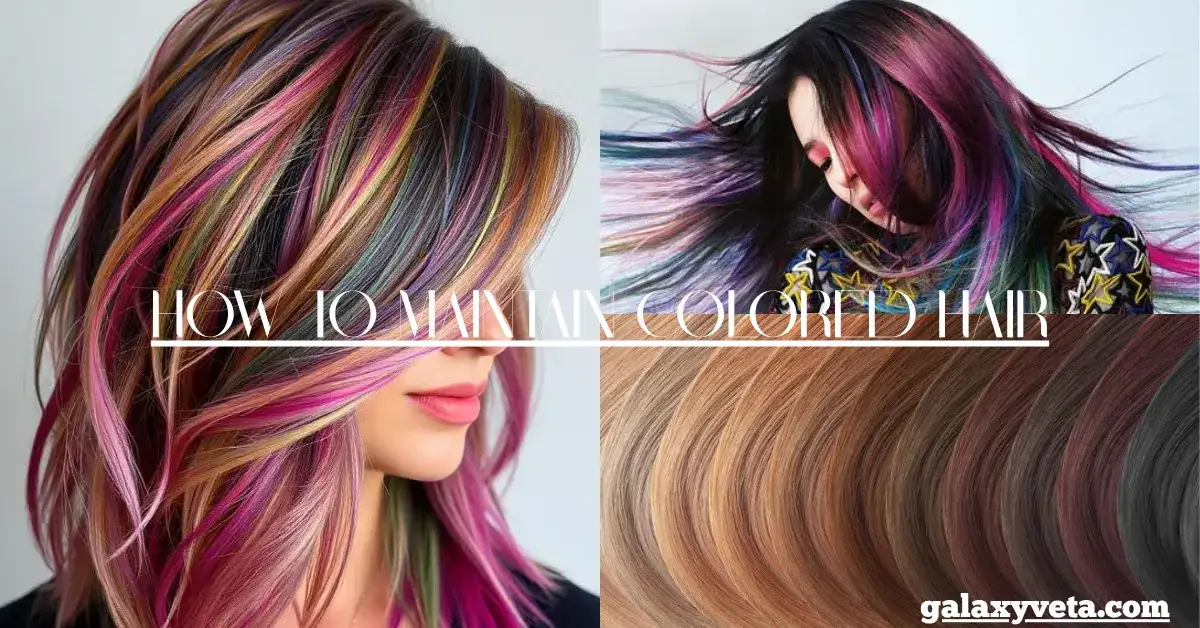
There’s nothing quite like walking out of the salon with fresh, gorgeous color whether it’s a rich balayage, bold vivid hues or a subtle gloss that makes your natural shade pop. But here’s the thing nobody really warns you about keeping that color looking exactly like day one takes a little know-how and honestly it can feel overwhelming at first.
The good news? Learning how to maintain colored hair doesn’t have to be complicated or crazy expensive. With the right habits, the right products and a bit of insider know-how, you can stretch your color’s life a lot so you save money, save time and avoid that heartbreak of watching your beautiful shade fade way too fast.
To maintain colored hair, use sulfate-free shampoo, wash with cool water, minimize heat styling, protect hair from the sun and schedule regular gloss or toner appointments. These habits together make the biggest difference in color longevity.
Read Also: 10 Best Hair Colors for Short Styles That Look Amazing in 2026
Why Colored Hair Needs Special Attention

When you color your hair whether with permanent dye, semi-permanent color or highlights the chemical process opens the hair cuticle to deposit or remove pigment. This leaves the strand more porous, more vulnerable to damage, and quicker to fade than untreated hair.
Understanding this helps you make smarter choices about everything from what shampoo you reach for to how hot you set your flat iron. Think of colored hair like a delicate fabric it needs gentler care to maintain its beauty.
Don’t Wash Your Hair the Day After Coloring
One of the most common mistakes people make is hopping in the shower the very next morning after a color appointment. Your stylist opened up your hair cuticle during the coloring process and it needs time at least 48 to 72 hours to close back down and lock in that pigment.
Washing too soon essentially rinses out the color before it’s fully set, which is why freshly colored hair often looks duller faster when people ignore this step. If your hair feels a bit sticky or product-heavy the next day, a dry shampoo is your best friend. Brands like Batiste or Klorane work beautifully on color-treated hair and won’t strip a thing.
Pro tip: Some stylists also recommend not tying your hair tightly for those first 48 hours elastic bands can cause creasing that looks like color inconsistency.
Always Rinse with Cool or Cold Water

Hot showers feel amazing. For colored hair? Not so much. Hot water expands the hair cuticle, which lets your color molecules escape far too easily. It’s one of the quietest culprits behind premature fading.
Switching to lukewarm or cool water when you rinse your hair even if you keep the rest of your shower warm makes a noticeable difference over time. Cool water actually seals the cuticle, locking in moisture and color simultaneously. It also adds shine, which is a bonus for color-treated hair that tends to look a little lackluster between appointments.
Be Careful with Heat Styling on Freshly Dyed Hair
For at least the first week after coloring, try to give your blow dryer, curling iron and flat iron a rest. Freshly colored hair is in a temporarily vulnerable state and high heat can warp the color molecules before they’ve fully stabilized.
When you do use heat tools, always apply a good heat protectant spray first. Look for ones specifically formulated for color-treated hair they typically contain ingredients that form a barrier around the shaft without weighing it down. Keep your tools under 350°F whenever possible and if your hair is fine or previously damaged, aim even lower.
Best Heat Styling Habits for Color-Treated Hair
- Always use a heat protectant (non-negotiable)
- Lower the temperature setting on your tools
- Use a brush attachment on your blow dryer for more control and less direct heat
- Air-dry at least 80% before finishing with heat
- Use ceramic or tourmaline tools they distribute heat more evenly
Use Only Color-Safe, Sulfate-Free Products

This is the single most impactful daily habit you can build. Regular shampoos often contain sulfates (like sodium lauryl sulfate or sodium laureth sulfate) harsh detergents designed to strip oil and buildup. The problem is they don’t discriminate, and they strip your color right along with everything else.
Color-safe shampoos are formulated with gentler cleansing agents that clean without being aggressive. They also typically have a slightly acidic pH, which helps keep the cuticle sealed and your color molecules right where they belong.
What to Look for on the Label
- Sulfate-free (SLS-free and SLES-free)
- Paraben-free (parabens can dull color over time)
- UV filters (especially valuable if you’re outdoors often)
- Hydrolyzed proteins (help repair the structure of chemically treated hair)
Great options include Pureology Hydrate, Redken Color Extend and Olaplex No.4 all widely available and genuinely effective.
Consider Your Water Quality
Here’s something most people never think about: the water coming out of your tap could be fading your hair color. Hard water, which contains high levels of minerals like calcium, magnesium and iron, coats the hair shaft and causes color to look dull, brassy or uneven.
Chlorine in tap water is also a problem particularly for blondes or anyone with lighter tones, as it can cause a greenish or brassy tinge over time.
What You Can Do About It
- Install a filtered shower head this is the easiest and most affordable fix
- Use a clarifying treatment once a month to remove mineral buildup (just don’t overdo it)
- Try a chelating shampoo periodically it’s specifically designed to remove hard water deposits
- Rinse with filtered or bottled water after conditioning if you have very hard water at home
If you’re unsure whether your water is hard, you can buy an inexpensive test kit online or check your local water utility’s annual water quality report.
Wash Your Hair Before Getting It Colored

Most people assume the cleaner their hair, the better the color will take. But actually, going into your color appointment with slightly dirty hair (one to two days since your last wash) is ideal for most coloring techniques.
Natural oils that accumulate at the scalp act as a protective barrier during the chemical process, especially for on-scalp applications like root color. They help minimize scalp sensitivity and irritation. Your stylist may prefer to work on a little natural texture rather than super-squeaky-clean hair.
That said, if you’ve used a lot of heavy styling products (dry shampoo buildup, hairspray residue, oil treatments), a gentle wash a day or two before your appointment is a good idea so the color can penetrate evenly.
Avoid Matching Your Eyebrows to Your Hair Color Immediately
When you color your hair, the instinct to immediately dye your eyebrows to match is understandable but it’s worth pausing. Eyebrow dye is a separate process entirely and your skin around the brows is more sensitive than your scalp.
More practically, hair color can shift slightly in the first week after application (especially vivid colors or toners), so waiting to see the settled shade before making brow decisions is smart. If you do decide to tint your brows, always do a patch test first and consider going slightly lighter than your hair for a more natural look.
Steer Clear of Permanent Color When You Don’t Need It
Not every color refresh requires permanent dye. Permanent color contains ammonia and peroxide that penetrate the cortex and fundamentally alter your hair structure with each application. Over time, repeated permanent color can lead to significant porosity, breakage and dullness.
For between-appointment refreshes, consider these gentler alternatives:
- Semi-permanent color no ammonia, fades gradually, great for refreshing tone
- Demi-permanent color penetrates slightly but is much gentler than permanent
- Color-depositing conditioners tone while you condition, zero commitment
- Glossing treatments add shine and refresh tone without chemical alteration
If your goal is simply to refresh vibrancy between salon visits, a gloss or color-depositing conditioner is often all you need.
Schedule Regular Gloss Appointments
A gloss or toner appointment is one of the most underrated color maintenance tools available. These treatments coat the hair shaft and adjust or refresh the tone without the long-term commitments of permanent color.
For balayage or highlighted clients, a gloss every 6–8 weeks can keep brassiness at bay and add incredible shine. For vivid color clients, a semi-permanent refresh keeps tones bright. It’s a quicker, more affordable salon visit than a full color appointment and makes a visible difference.
Ask your colorist about whether a gloss is right for your current color formula most stylists offer it as an add-on to a regular appointment.
Read Also: Why Do They Call It Strawberry Blonde? Everything Need
Limit Sun Exposure to Prevent Fading
UV rays are one of the most aggressive sources of color fading, particularly for vivid shades, reds and lightened hair. The sun’s ultraviolet radiation breaks down the pigment molecules in your hair, causing color to fade unevenly and often in a way that looks brassy or washed out.
How to Protect Your Color from the Sun
- Wear a hat or scarf when spending extended time outdoors stylish and effective
- Use a UV-protectant hair spray or leave-in conditioner with UV filters before heading out
- Rinse hair with fresh water before swimming in the ocean or pool hair that’s already saturated absorbs less chlorinated or salt water
- Apply a protective serum or oil before sun exposure to create a barrier on the cuticle
This matters year-round, not just in summer. Even overcast days expose you to UV radiation, so building this habit consistently pays off.
Don’t Rely on Box Dyes as a Long-Term Strategy
Box dyes can seem like a convenient solution for touch-ups between salon visits, and used occasionally, they’re not the end of the world. But over time, repeated box dye use can create a significant problem: color buildup.
Box dyes deposit synthetic pigment molecules that are large and difficult for future color processes to penetrate or lift. If you plan to change your color later go lighter, try a different tone or even just switch brands you may find your hair is resistant or reacts unpredictably.
If you genuinely need a root touch-up between appointments, ask your colorist if they can supply you with a small amount of your exact formula or look into root concealer products (sprays, powders and touch-up pens) that wash out easily and don’t interfere with future color services.
Set Realistic Expectations for Gray Coverage
Gray hair has a different structural composition from pigmented hair it’s often coarser, more resistant to color absorption and tends to fade faster, particularly at the roots. If you’re covering grays, it’s important to have realistic expectations and a solid maintenance plan.
Permanent color gives the best gray coverage, but it also means more frequent touch-up appointments (typically every 4–6 weeks for solid root coverage). Some clients find that blending grays with highlights or opting for a slightly lighter overall color makes the grow-out far less noticeable and stretches time between appointments.
Gray Coverage Tips
- Use a root spray between appointments to conceal grow-out without committing to dye
- Choose a shade slightly lighter than your natural gray for softer regrowth lines
- Ask about gray blending techniques they’ve become extremely sophisticated and natural-looking
- Deep condition weekly gray hair tends to be drier and needs extra moisture
Build a Consistent Deep Conditioning Routine
Color-treated hair loses moisture more easily than unprocessed hair. A weekly deep conditioning treatment isn’t a luxury it’s genuinely necessary for maintaining the integrity and vibrancy of your color.
Look for masks that are specifically designed for color-treated or chemically processed hair. Ingredients like keratin, argan oil, shea butter and hydrolyzed silk proteins help restore softness and flexibility. Olaplex No. 3 remains one of the most praised bond-building treatments for chemically treated hair.
How often: Once a week for heavily processed or lightened hair; once every two weeks for semi-permanent or lighter color treatments.
Apply from mid-length to ends (avoiding the roots unless your scalp is dry), leave for 10–20 minutes and rinse with cool water.
Maintenance Tips for Different Hair Types
Colored hair doesn’t behave the same way across different textures and types. Here’s what to keep in mind:
Fine Hair
Fine strands are more easily weighed down by heavy products, but they’re also more vulnerable to breakage after chemical processing. Opt for lightweight color-safe conditioners, use bond-building treatments regularly and avoid over-washing.
Thick or Coarse Hair
Coarse hair tends to be more porous after coloring and may need richer, more intense conditioning treatments. Apply mask treatments generously and consider leaving them on longer (up to 30 minutes).
Curly or Wavy Hair
Curls are naturally more porous, which means color fades faster. Curl-specific color-safe products, regular deep conditioning and avoiding high heat are especially important. Refresh curls with a leave-in conditioner between washes to maintain moisture balance.
Fine or Thin Hair with Color
Adding color can give fine hair more visible texture and body, which is a genuine benefit. Stick to lighter overall techniques (like highlights or balayage) rather than full-head permanent color if possible they’re generally less damaging on fragile strands.
Common Mistakes That Fade Color Fast
Even with the best intentions, these habits can undermine all your maintenance efforts:
- Washing too frequently every other day or every two to three days is better than daily for most color types
- Using clarifying shampoo too often once a month max; it’s powerful and strips color quickly
- Skipping conditioner conditioner seals the cuticle and significantly impacts how long your color lasts
- Switching products constantly your hair builds a relationship with products; consistency pays off
- Ignoring your scalp a healthy scalp environment supports healthier hair growth and better color absorption
- Over-processing getting color too frequently doesn’t give your hair time to recover between services
- Forgetting the ends the oldest, most porous part of your hair needs the most conditioning attention
Pro Tips From Colorists
- Purple or blue shampoo is for more than blondes purple shampoo tones brassiness in highlighted hair, while blue shampoo neutralizes orange tones in brunette highlights
- Silk pillowcases reduce friction less friction means less cuticle damage and color fading overnight
- Rinse color-depositing products in the shower slowly the longer they sit while you rinse, the more deposit you get
- Ask your colorist for a take-home toner many professionals are happy to provide a small bottle for between-appointment touch-ups
- Switch to a gentle micellar-based cleansing shampoo for light wash days when you don’t need deep cleaning
- Dilute your shampoo slightly with water before applying this creates a lighter lather that’s less stripping on color-treated lengths
- Layer your products leave-in conditioner, then styling product, then oil sealant for maximum moisture retention
Best Styling Ideas for Colored Hair
Colored hair often benefits from styling techniques that enhance the dimension your color provides:
- Soft waves showcase highlights and balayage beautifully use a large-barrel curling wand and let waves cool before touching
- Sleek blowouts amplify the shine of a fresh gloss treatment
- Textured updos work wonderfully for vivid color clients the layered look highlights multidimensional tones
- Braids are low-heat, low-manipulation and actually show off color dimension in a striking way
- Half-up styles frame the face while showing off your color’s depth and variation
Seasonal Hair Color Maintenance
Different seasons bring different challenges for colored hair:
Summer: UV exposure, chlorine, salt water and humidity are your main concerns. Protective sprays, weekly deep conditioning and a post-swim rinse routine are essential.
Winter: Cold air and indoor heating strip moisture aggressively. Focus on hydrating masks, oil treatments and avoiding static-inducing materials (like wool hats use a satin-lined hat instead).
Spring/Fall: Transition seasons are actually great times to refresh your color formula ask your colorist about seasonal adjustments like warmer tones for fall or brighter, lighter work for spring.
FAQS
Q: How long does colored hair last before it fades?
A: Permanent color lasts about 4–6 weeks, while semi-permanent color lasts 4–8 washes.
Q: Can I wash my hair every day with colored hair?
A: No, wash colored hair only 2–3 times a week to prevent fading.
Q: What shampoo is best for maintaining colored hair?
A: Use a sulfate-free, color-safe shampoo like Pureology, Redken, Olaplex or Joico.
Q: Does purple shampoo work on all colored hair?
A: No, it works best on blonde, silver, highlighted or lightened hair.
Q: How can I make my hair color last longer naturally?
A: Use cool water, wash less often and protect hair from sun exposure.
Q: Is it okay to swim with colored hair?
A: Yes, but wet your hair first and rinse it immediately after swimming.
Q: How do I prevent my red hair color from fading so quickly?
A: Use a color-depositing conditioner, wash less often and rinse with cold water.
Final Thought
Colored hair is kind of an investment for your whole look, your self belief and also your time. If you treat it with the right care it will pay you back with weeks of lively color that makes people do a double take.
The trick isn’t just one miracle product, no… it’s more like a cluster of easy, steady routines done in the right way.