
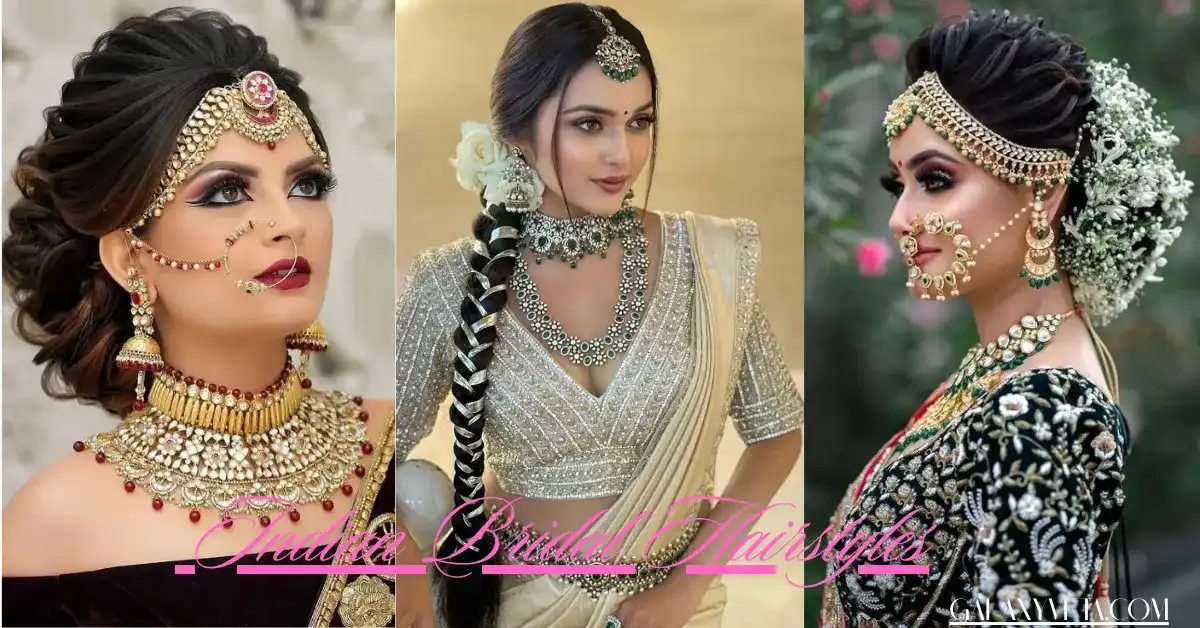
Picking the perfect bridal hairstyle is one of those little decisions that can, somehow still stress out even the most calm bride. With so many wedding functions, outfit changes and hours of dancing ahead, your hair has to look gorgeous in photos and also survive the day for real. Indian bridal hairstyles have changed a lot over time, mixing traditional touches like braids, gajras and maang tikkas with newer methods such as hair extensions and textured curls.
I’ve tried quite a few indian bridal hairstyles over the years, while helping friends get ready for their weddings and also for my own family functions, and honestly, out of all the looks I tested, a structured braided bun with pins placed in just the right spots stayed the best , like it held up the longest without me doing constant fixes every hour.
So whether you’re a South Indian bride who loves the classic braid vibe, a North Indian bride who’s kinda dreaming of a floral half-up style or someone who wants a fusion hairstyle completely different, this guide sorts options by occasion, face shape, hair type and even age group, so you can choose what really suits you.
How to Choose the Right Indian Bridal Hairstyle
The best indian bridal hairstyle depends on your outfit’s neckline, your face shape and how long you’ll be wearing it. For a heavily embellished lehenga or saree, a sleeker updo balances the outfit, while flowing curls work beautifully with lighter, minimalist drapes.
Classic South Indian Braid

The classic South Indian braid remains one of the most timeless indian bridal hairstyles, especially for Tamil, Telugu and Kannada weddings. It’s typically adorned with fresh jasmine flowers, gold hair accessories, and sometimes a long braid extension for extra length and volume. This style pairs beautifully with traditional silk sarees and works wonderfully for brides who want an authentic, temple-wedding aesthetic without anything overly modern.
Messy Braided Bun

A messy braided bun softens the formality of bridal dressing while still looking intentional and elegant. Stylists usually loosen a few face-framing strands and add a slight bouffant at the crown for volume. This is a fantastic choice for brides with fine hair who want a fuller look without the weight of extensions, and it tends to photograph beautifully from every angle.
Side-Swept Curls with Maang Tikka

This look combines romantic, side-swept curls with a statement maang tikka resting against the forehead. It works particularly well for round and oval face shapes since the curls add softness while the tikka draws the eye upward. Many brides choose this for their engagement or sangeet because it feels glamorous yet still rooted in tradition.
Twisted Crown with a Bun

A twisted crown braid that wraps around the head before settling into a low bun creates a regal, almost storybook silhouette. It’s especially flattering for brides with longer faces, as the horizontal twist visually balances facial proportions. This style holds up well through long ceremonies since the twists keep hair secured close to the scalp.
Long Fish Tail Braid

The fishtail braid has become a favorite among brides who want something slightly different from the standard three-strand plait. Left loose down the back or draped over one shoulder, it adds texture and movement, particularly when paired with thin gold chains woven through the strands. It suits brides with medium-length to long hair and works for both daytime and evening functions.
Traditional Gajra Bun

A gajra bun, generously wrapped in fresh jasmine or rose garlands, is a staple for South Indian and Maharashtrian brides. The fragrance and visual appeal of fresh flowers make this one of the more sensory indian bridal hairstyles, though it does require flowers to be replaced or refreshed if the wedding spans multiple days. It’s an excellent low-maintenance option once secured properly.
Open Waves with Hair Chain

Loose, soft waves paired with a delicate hair chain draping across the part offer a more contemporary bridal look. This style suits brides who don’t want anything too structured and prefer a relaxed, bohemian-meets-traditional vibe. It works particularly well for cocktail parties or mehendi functions rather than the main wedding ceremony.
Layered Curls with Front Hair Bangs

For brides with layered haircuts, soft curls combined with side-swept front hair bangs create a youthful, face-framing effect. This front hair style woman look is increasingly popular among younger brides who’ve already gotten layers cut and want a style that complements rather than fights their existing haircut.
Read Also: Stunning Bridesmaid Hairstyles for Thin Hair That Actually Look Gorgeous
Braided Bun with Hair Extensions

When natural hair lacks volume or length, a braided bun with clip-in extensions can transform thin or shoulder-length hair into a fuller, more elaborate bridal hairstyle. This is one of the most requested options at bridal salons because it gives stylists more material to work with for intricate braiding patterns and a substantial-looking bun.
Halo Hair Extensions for Loose Curls

Halo extensions, worn as a hidden wire-based topper, add volume and length without the commitment of clip-ins throughout the day. Combined with loose curls, this creates a soft, voluminous look ideal for brides with fine or thin hair who still want that full, cascading effect for their reception.
Celebrity-Inspired Pouf Bun

Inspired by red-carpet and Bollywood looks, the pouf bun adds height at the crown before transitioning into a sleek, low bun. This silhouette elongates round faces and pairs exceptionally well with heavy, statement jewelry since the hairstyle itself stays relatively streamlined below the pouf.
Side Bun with Fresh Flowers

A side bun decorated with fresh flowers offers an asymmetrical, romantic alternative to the classic centered bun. It works particularly well for mehendi or haldi functions where a slightly more casual, garden-party aesthetic fits the mood better than a formal ceremony look.
Dutch Braid Crown with Low Bun

The Dutch braid, with its raised, three-dimensional appearance, creates a striking crown effect before flowing into a neat low bun. This is a great pick for brides with thick, textured hair since the braid holds its shape exceptionally well and doesn’t loosen easily, even during long photo sessions.
Sleek Ponytail with Hair Wrap

A sleek, high ponytail wrapped with a strand of hair or decorative fabric offers a minimalist, modern take on indian bridal hairstyle traditions. It’s particularly suited to reception functions where brides want something polished but lightweight after wearing heavier styles earlier in the wedding.
Floral Embellished Half-Up Half-Down

This versatile style keeps hair partially down while pinning back the crown section with fresh or artificial flowers. It flatters nearly every face shape and hair length, making it one of the more universally recommended wedding indian hair style woman options for daytime functions.
Loose Waterfall Braid

The waterfall braid creates a cascading effect where sections of hair are released as the braid progresses, leaving soft waves falling beneath it. This technique works beautifully for outdoor or destination weddings since it has a naturally romantic, wind-swept quality.
Side-Parted Voluminous Curls
A deep side part combined with voluminous, bouncy curls creates instant drama and works exceptionally well for brides who want their hair fully down for the reception. This style benefits from a strong-hold setting spray since the volume needs to last through hours of dancing and socializing.
Traditional Bun with Juda Pins
A traditional juda, decorated with ornate gold pins and sometimes a matching hairpiece, remains a dependable choice across most Indian wedding traditions. The decorative pins themselves often become a focal point, adding sparkle without requiring additional flowers or extensions.
Choosing by Hair Type
Fine or thin hair generally benefits from styles incorporating extensions, braids or a teased crown, since these add the illusion of volume and density.
Thick or coarse hair holds intricate braiding patterns exceptionally well and rarely needs extensions, though it may require extra pins to keep flyaways controlled.
Curly or wavy hair textures work naturally with half-up styles and loose waterfall braids that embrace rather than fight the existing texture.
Choosing by Face Shape
Round faces are typically flattered by styles with height at the crown or asymmetrical side buns, since these create the illusion of length.
Oval faces tend to suit almost any indian bridal hairstyle given their naturally balanced proportions.
Square faces benefit from softer, wavier textures near the jawline, while heart-shaped faces often look stunning with side-swept curls that balance a narrower chin.
Hairstyles by Age Group
Brides in their early twenties often gravitate toward romantic curls, floral details and softer braided looks that feel youthful and fresh.
Brides in their thirties frequently prefer more structured updos like twisted crowns or sleek buns that read as polished and sophisticated.
For brides in their forties and beyond, classic buns with elegant pinning and minimal but well-placed accessories tend to photograph beautifully while remaining comfortable for long hours.
Seasonal Trends to Know
Summer weddings often call for lighter, less product-heavy styles since heat and humidity can affect hold, making braided looks more practical than loose curls.
Winter weddings allow more flexibility for voluminous curls and heavier styling since lower humidity helps curls last longer.
Monsoon season weddings benefit enormously from braided or pinned-up styles that resist frizz better than anything left loose.
5 Styling Tips for Indian Bridal Hairstyles
A strong base matters more than the final style itself, so always start with clean, slightly textured hair rather than freshly washed strands, since freshly washed hair tends to be too slippery to hold pins well.
Setting spray applied in sections, rather than just at the end, genuinely extends hold throughout a 10-12 hour wedding day.
Pinning from multiple directions, not just straight down, prevents buns and braids from loosening as the day progresses.
Doing a trial run at least two weeks before the wedding, in actual wedding-day lighting, helps avoid last-minute surprises with how a style photographs.
Carrying a small emergency kit with bobby pins, a travel-size hairspray, and a few extra flowers or pins ensures quick fixes between functions.
Common Mistakes to Avoid
Choosing a hairstyle without considering your outfit’s neckline often results in a mismatched overall look, since high necklines need different styling than plunging or off-shoulder cuts.
Skipping the trial run is one of the most common regrets brides mention afterward, since hair that looks fine in a salon might behave differently under wedding lighting and humidity.
Overloading the hairstyle with too many accessories can make it feel cluttered rather than elegant, especially when jewelry is already statement-heavy.
Ignoring hair health in the weeks leading up to the wedding can leave strands brittle and harder to style, so deep conditioning treatments matter more than people expect.
Lastly, not communicating clearly with your stylist about how long the style needs to last can result in techniques that look great initially but loosen within a few hours.
5 Pro Tips from Experience
Asking your stylist to use texturizing spray rather than relying purely on curling irons creates more natural-looking, long-lasting movement.
Securing the first pin at the nape of the neck before building upward gives buns a sturdier foundation.
Using hairnets that match your hair color underneath buns prevents visible gaps that can show up in close-up photography.
Requesting a slightly looser style than what you’d normally wear day-to-day actually photographs better, since camera angles tend to make hair look tighter than it feels in person.
Finally, keeping a small travel mirror handy lets you check the back of your hairstyle between functions, which is often the angle brides forget to monitor.
FAQS
Which indian bridal hairstyle lasts the longest without touch-ups?
Braided styles, particularly buns secured with multiple pins, tend to hold up best through long wedding days since braids resist loosening better than loose curls or waves.
What hairstyle suits a round face for an Indian wedding?
Styles with height at the crown, such as a pouf bun or twisted crown, generally flatter round faces by visually elongating the face shape.
Should I do a hair trial before my wedding?
Yes, a trial run at least two weeks before the wedding, done in similar lighting to the venue, helps confirm the style holds and photographs the way you expect.
Can fine or thin hair handle elaborate bridal hairstyles?
Yes, with the help of clip-in or halo extensions, fine hair can support most elaborate braided or voluminous bridal hairstyles without looking flat.
What’s a good hairstyle for a monsoon wedding?
Braided or pinned-up styles generally resist humidity and frizz far better than loose curls during monsoon season ceremonies.
Final Thought
Your bridal hairstyle should feel a bit like a continuation of who you are, not only a trend pulled from somebody else wedding album. Whether you’re into a classic gajra bun or more modern halo extension curls, go for comfort and long wear along with beauty, because you’ll be living in that look for hours, honestly.
Do a proper trial first, speak with your stylist clearly and lean on hairstyles that have really been tested and proven dependable. And in the end, the best indian bridal hairstyle is the one that lets you actually enjoy your day, with out a single worry about your hair.